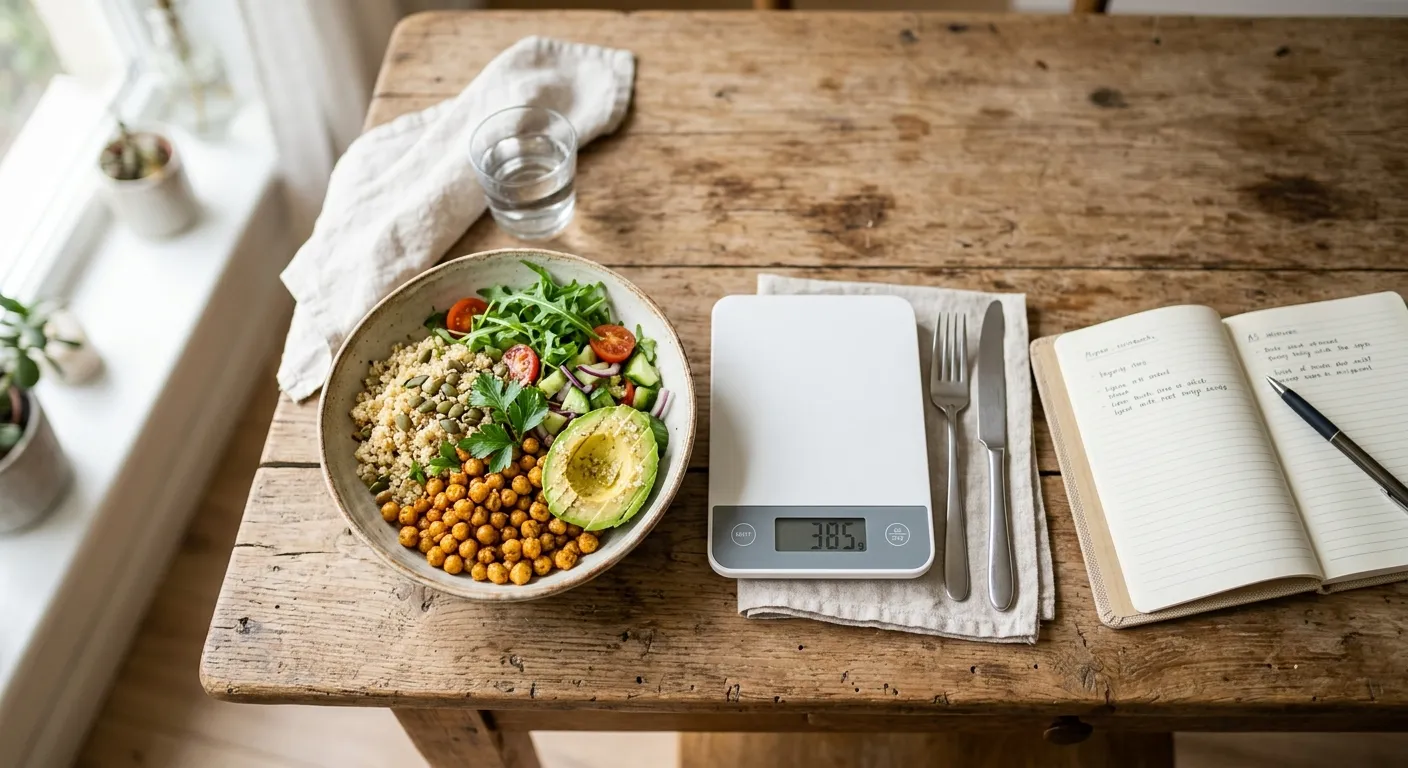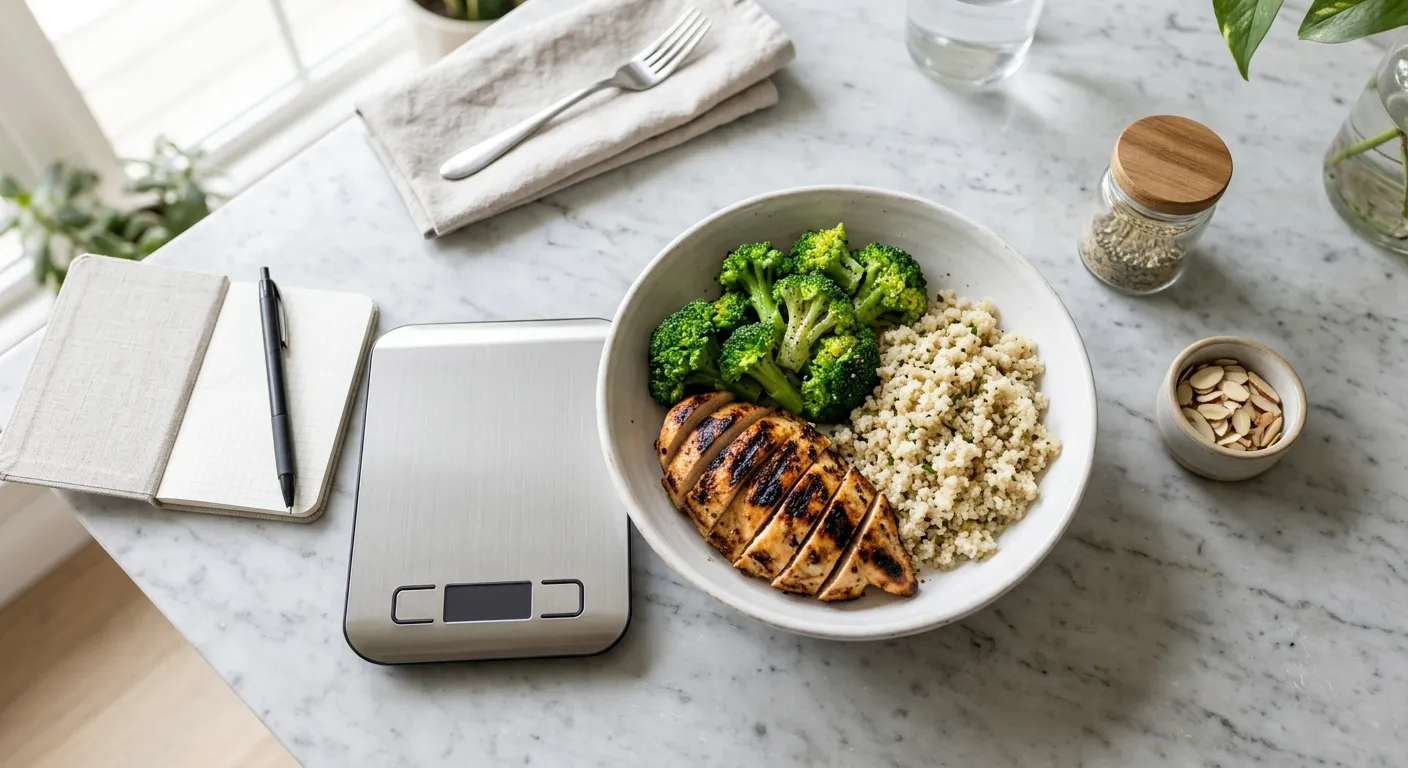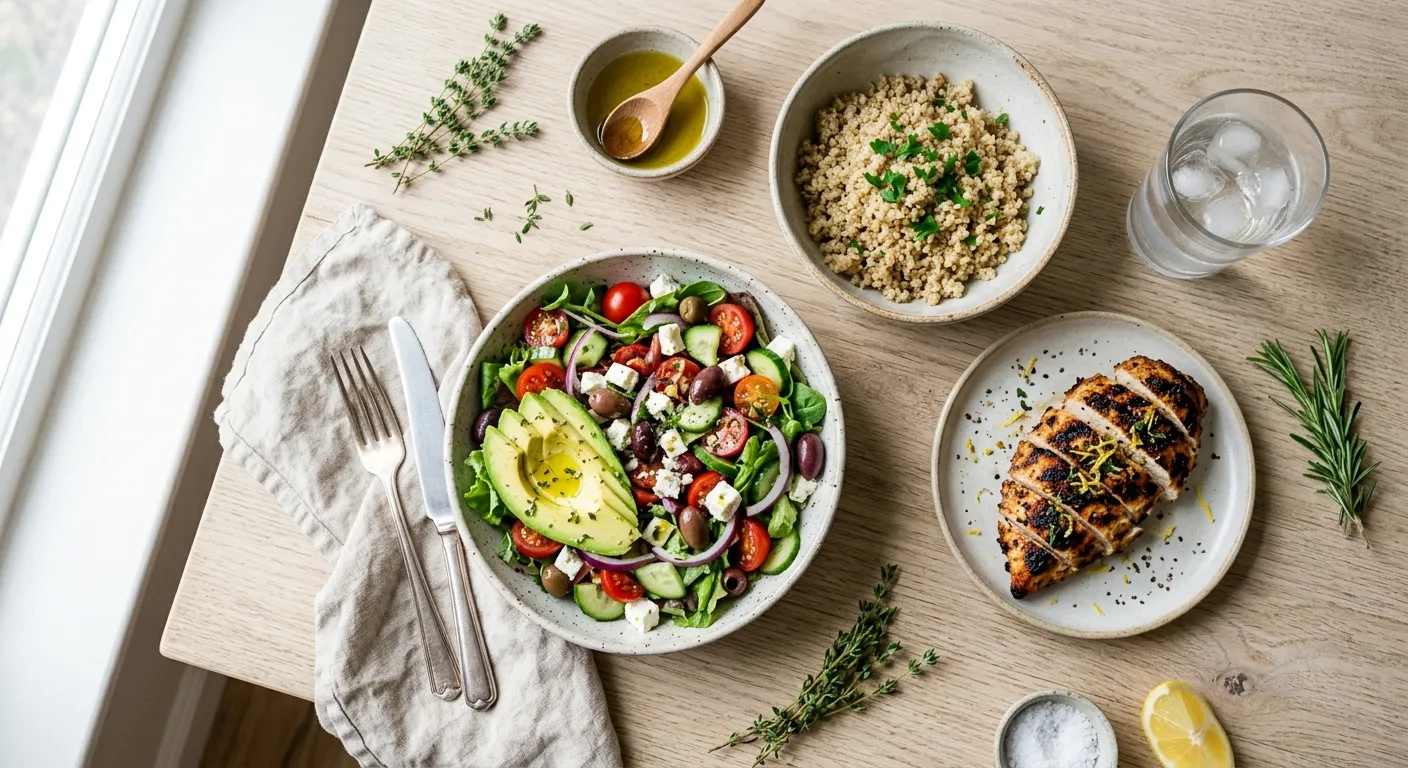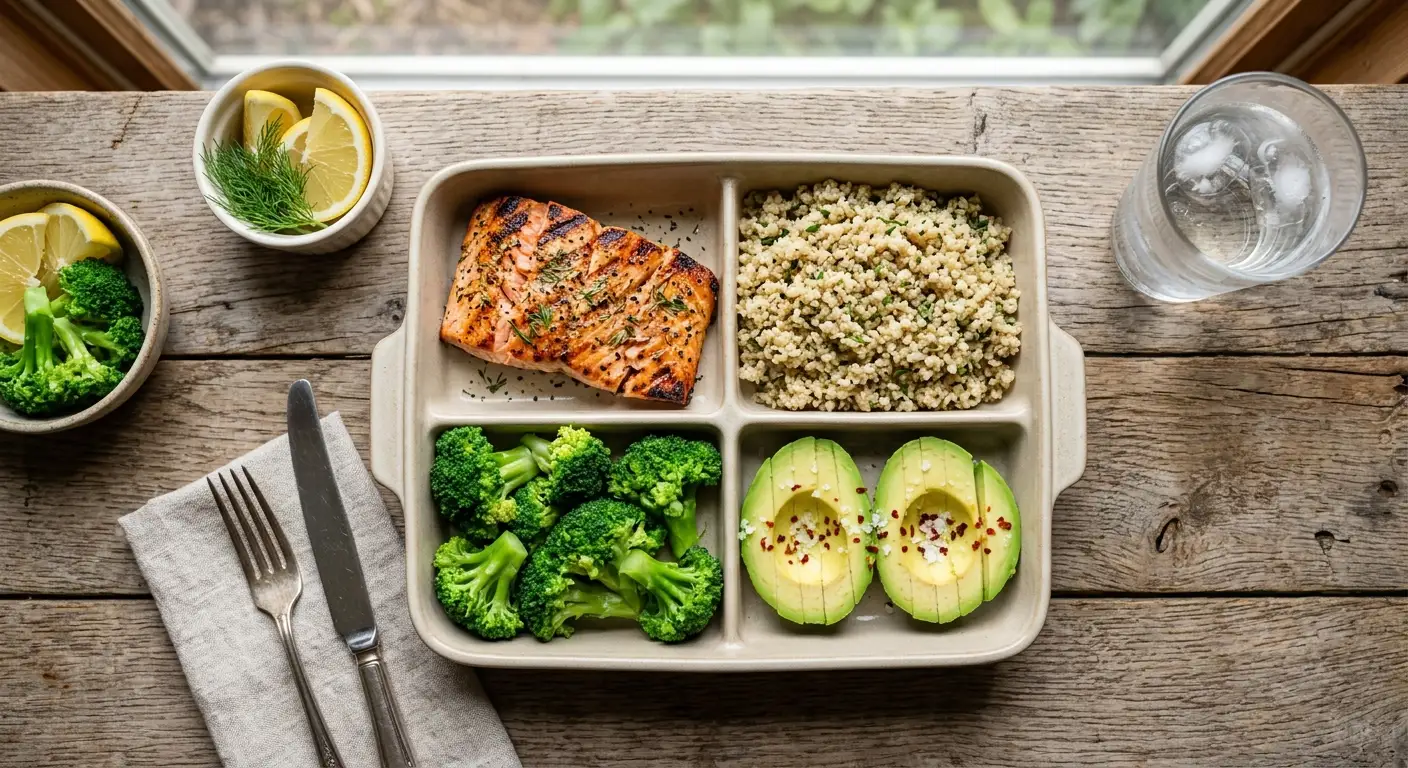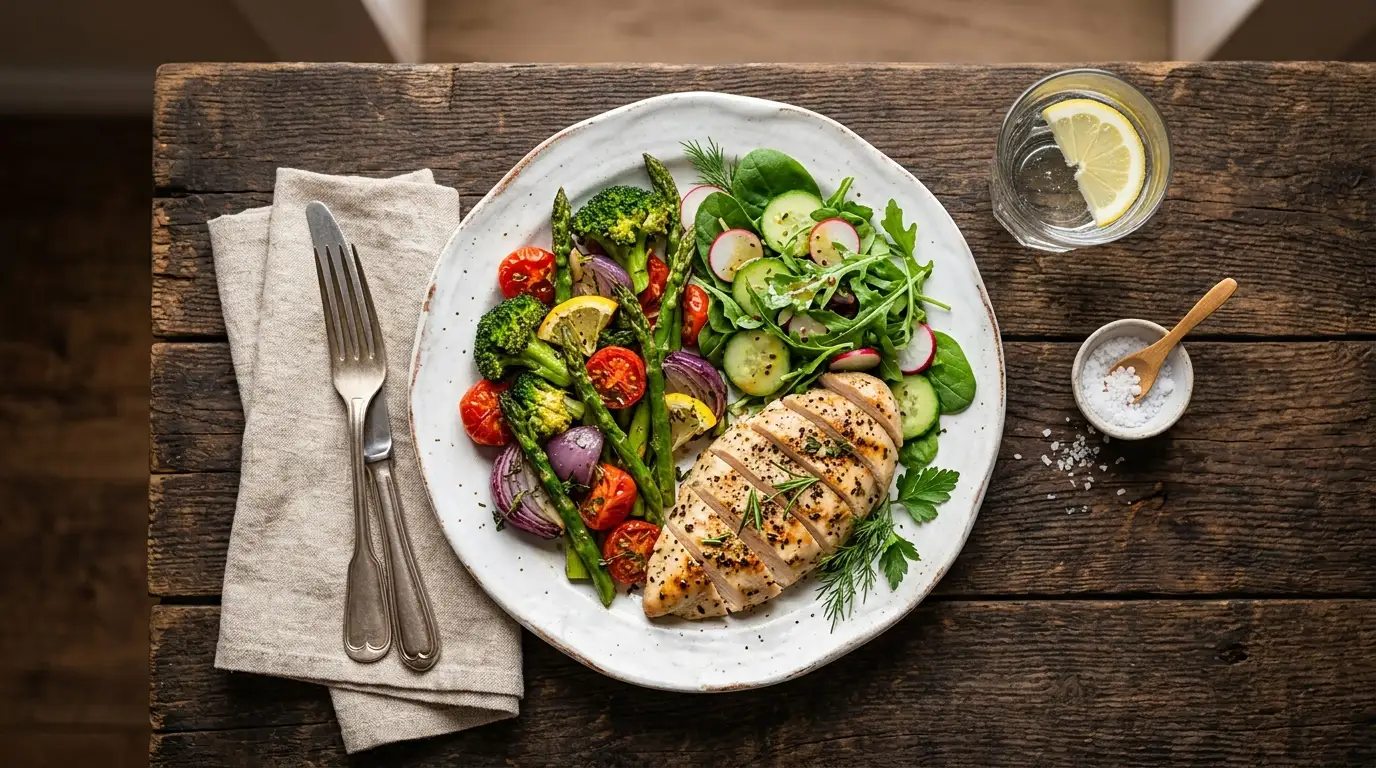

Snap your food. Know your calories.
Take a photo, type it out, or say it — ScanFood.AI gives you calories and macros in seconds. No databases. No manual input. Just your food and the answer.
Start tracking free


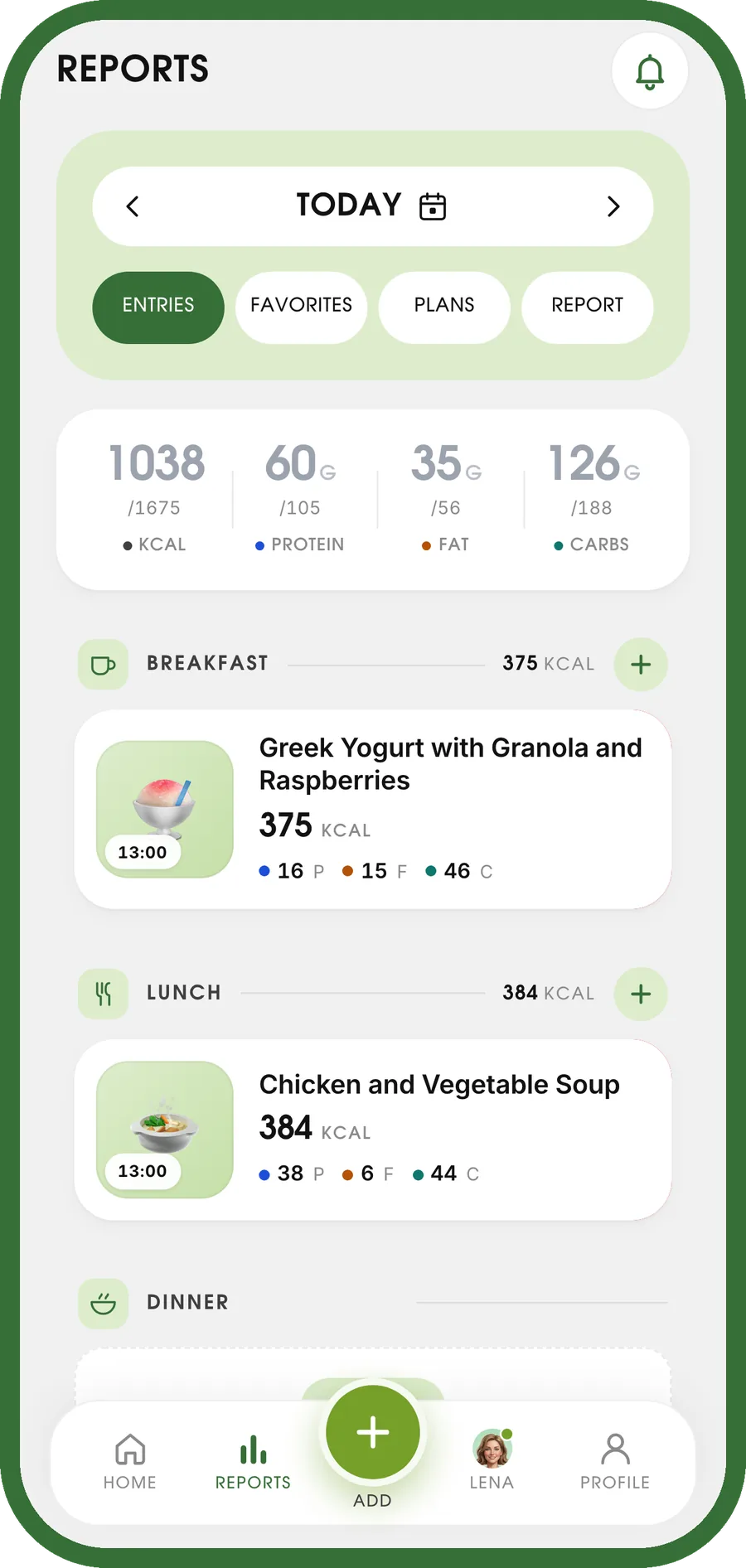
Tracking calories shouldn't feel like homework
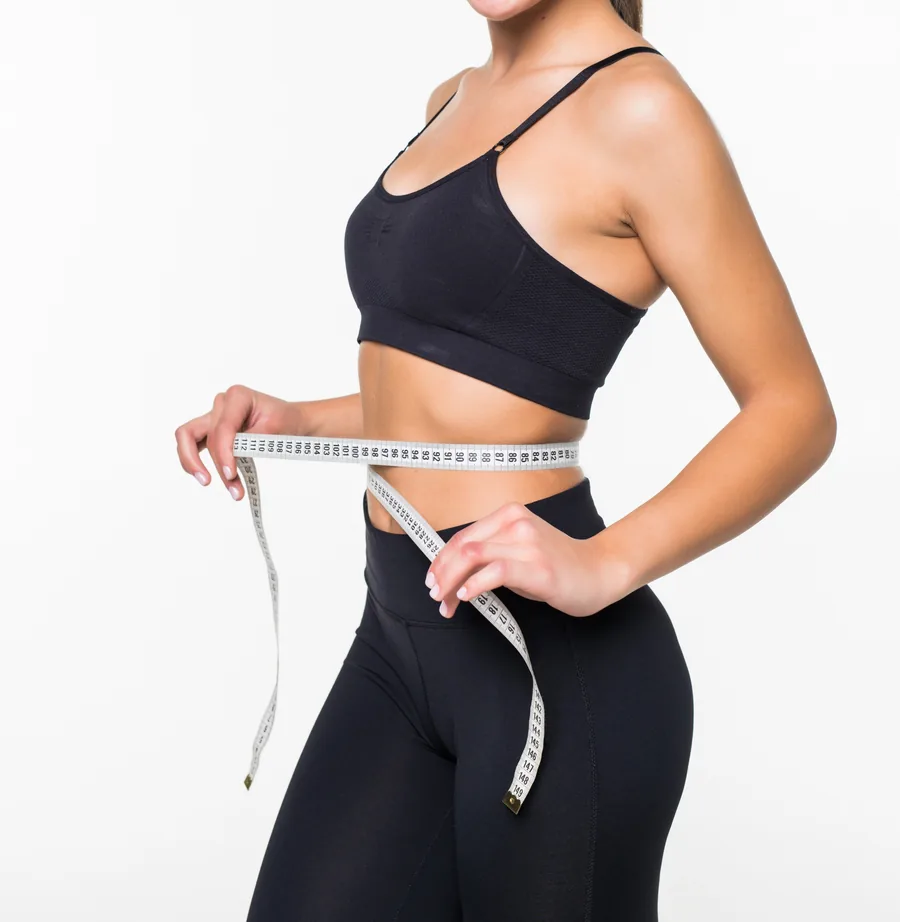
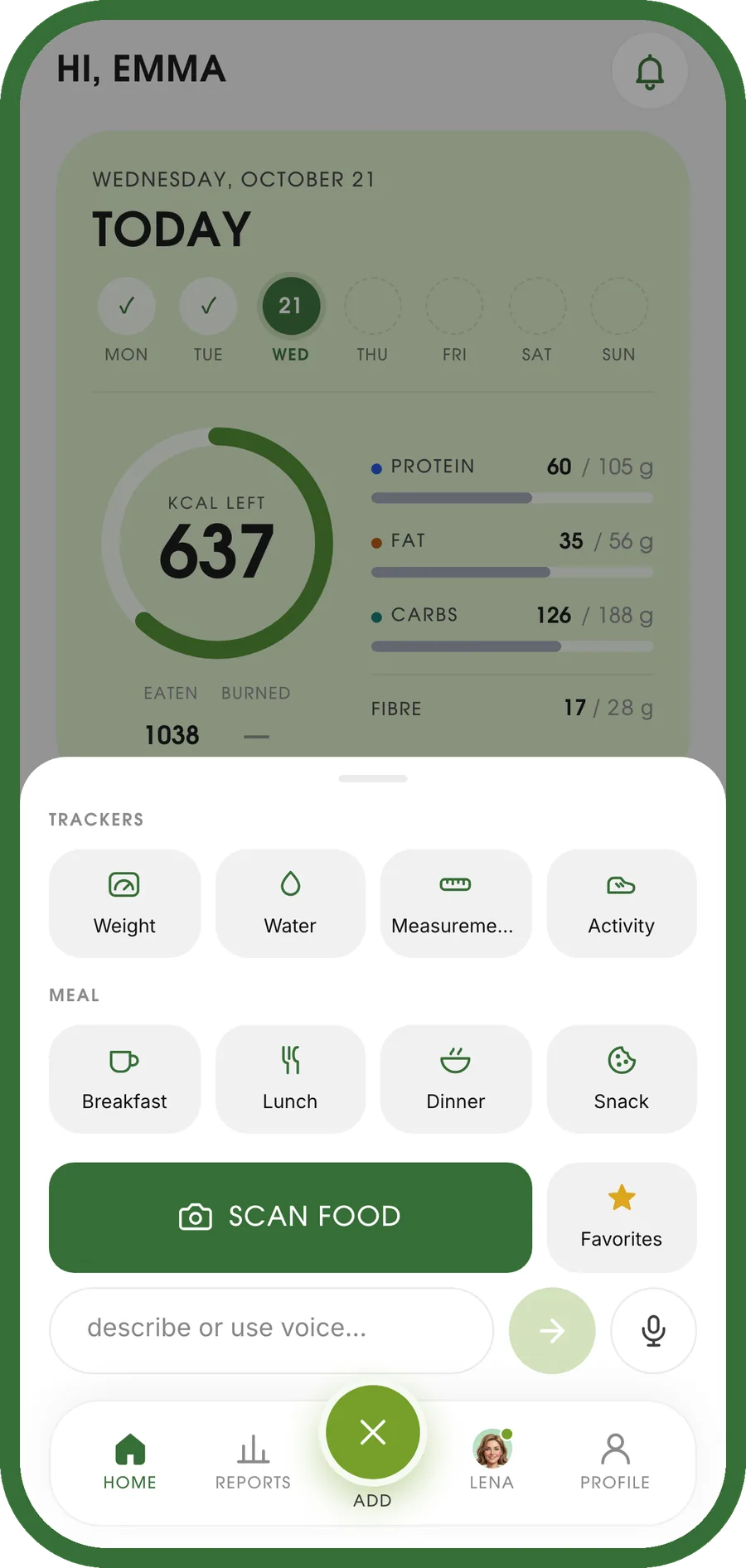
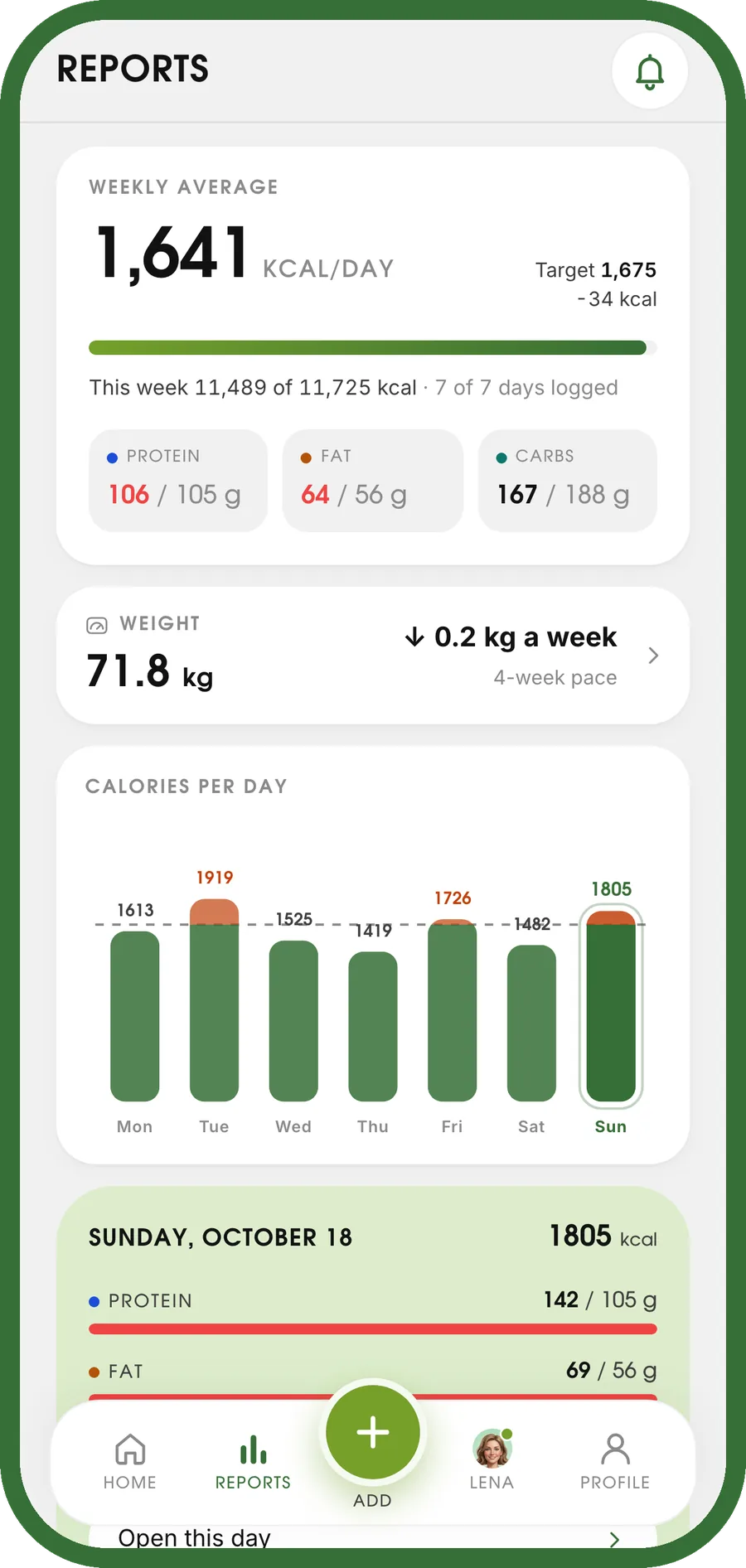
Daily and weekly reports with progress tracking
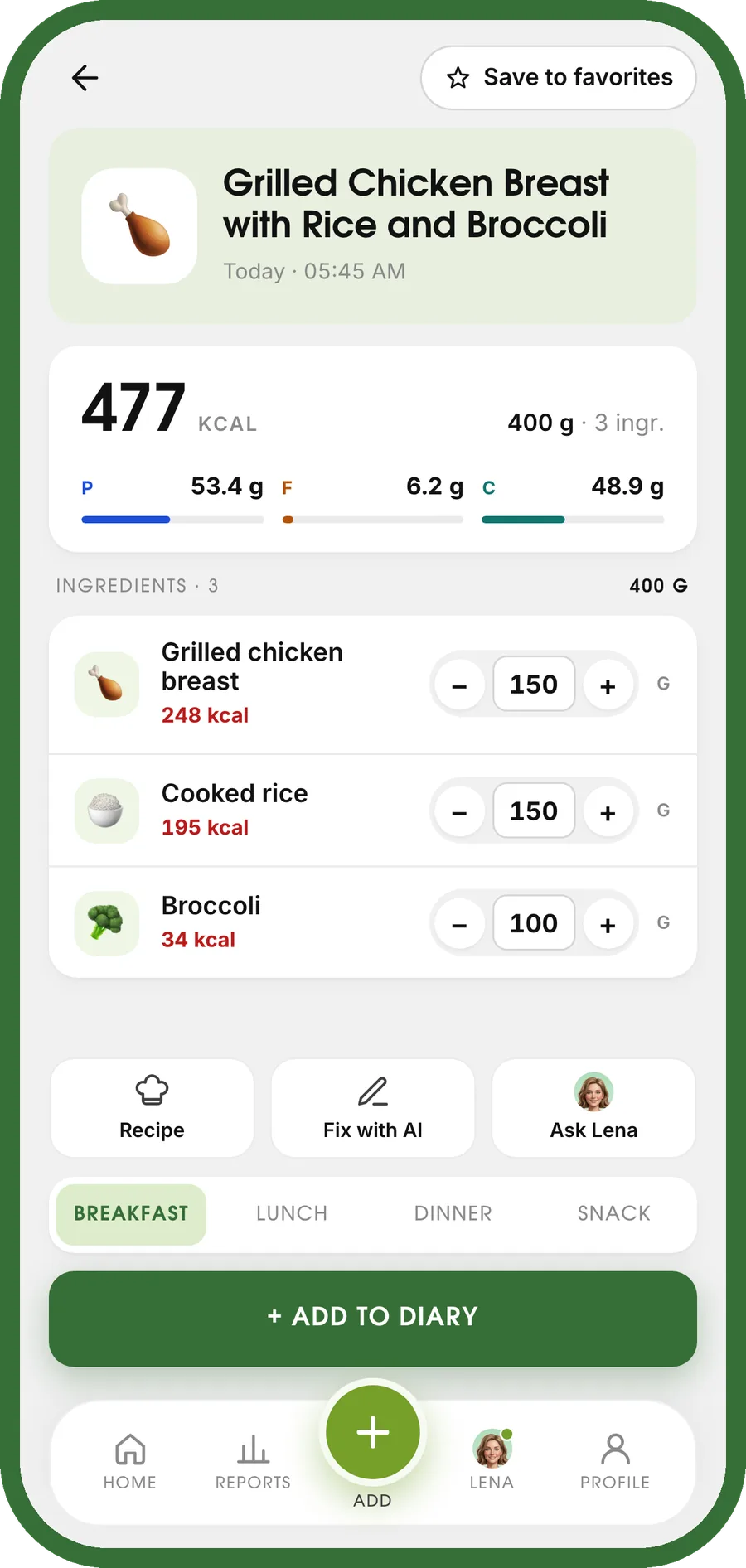
ScanFood.AI counts calories and macros, helps maintain a deficit, and saves everything to your diary.
Great for bulking, cutting, and maintenance
Track protein and macros to recover faster and hit your targets — no manual entry needed.
 Discipline
Build habits that stick — without white-knuckling it
Weight charts, food diary, and weekly reports keep you honest.
Compare meals and choose the best option
Analyze your recipes, create new ones with full macro breakdown.
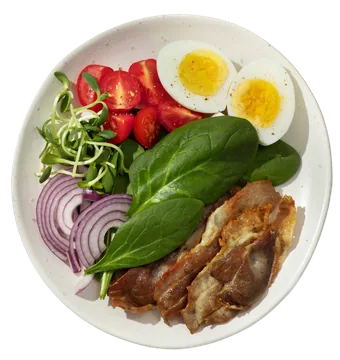
Pick a feature, build your request, and get a result in 5 seconds.
Upload a photo, describe by text, or record a voice message.
Get a full macro breakdown per ingredient and total.
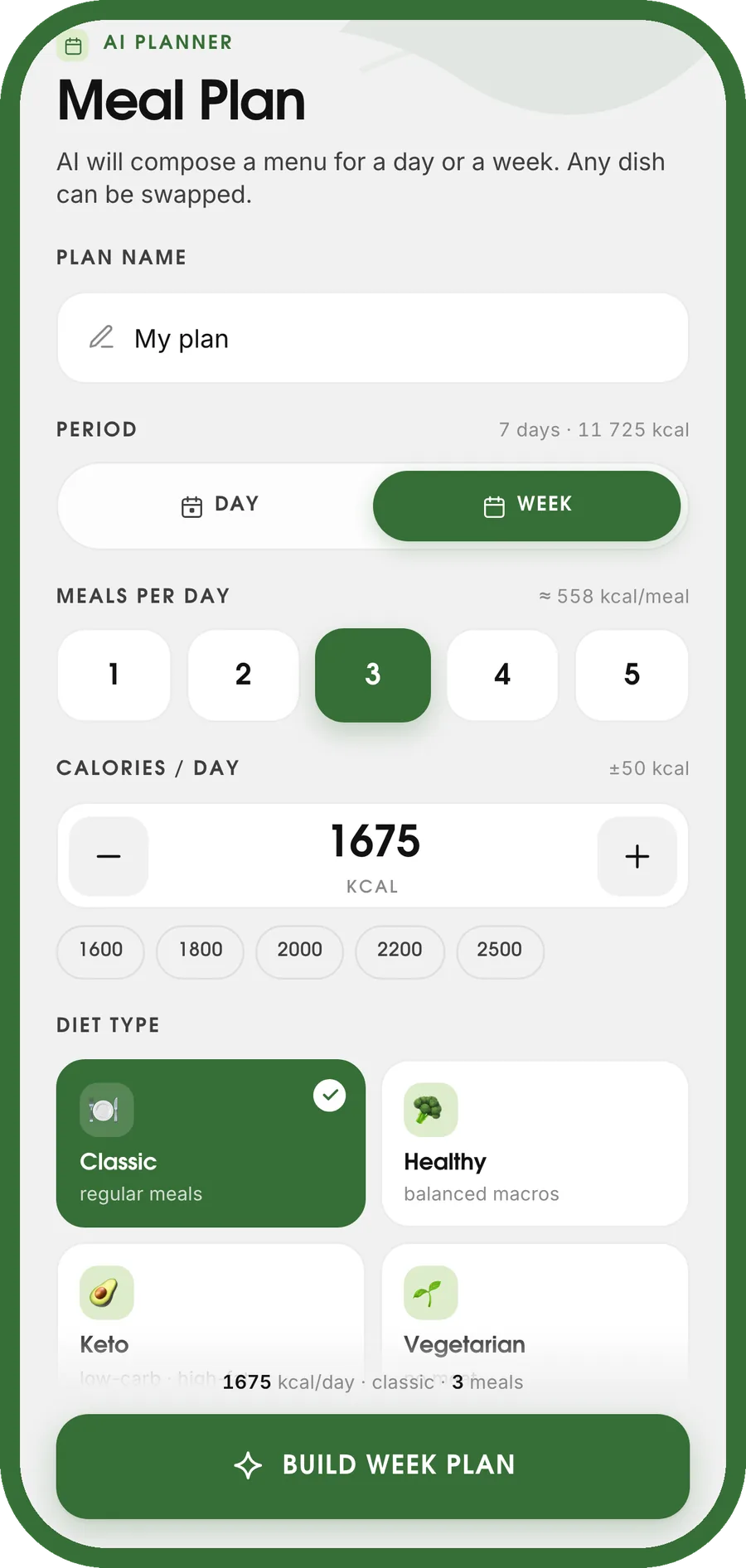
Set your goal, timeline, meals per day, and eating style.
Get a ready meal plan with macros, recipes, and a shopping list.
Ask any question about nutrition and food.
Get a detailed answer and breakdown of your question.
Choose a meal type, set preferences and restrictions.
Get a detailed recipe with tips and a shopping list.
Meals are saved to your diary automatically.
Get a nutrition diary with reports and export to .xlsx.
Log your weight regularly.
See trends over a week, month, or six months.
How it works
Pick a feature, build your request, and get a result in 5 seconds.
Test every feature with no limits — tracking, diary, reports, and meal plans.
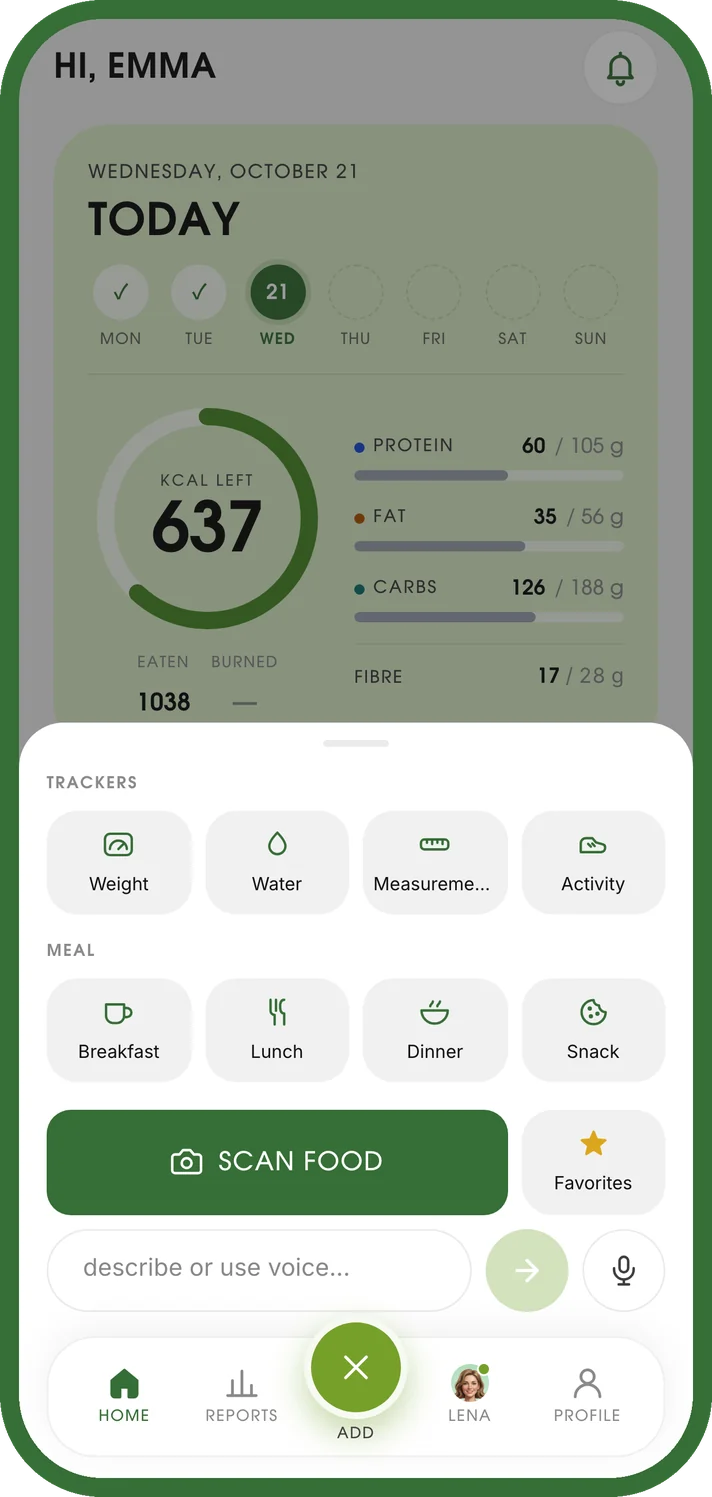
Food analysis
Macros in under a minute
Food diary
Meal history, weight chart
Meal plans
Daily or weekly menu
Recipes
Macros from a photo or text
AI nutritionist
Nutrition advice and answers
AI dishes
Recipes for your ingredients and goals
Test every feature with no limits — tracking, diary, reports, and meal plans.
Food analysis
Macros in under a minute
Food diary
Meal history, weight chart
Meal plans
Daily or weekly menu
Recipes
Macros from a photo or text
AI nutritionist
Nutrition advice and answers
AI dishes
Recipes for your ingredients and goals
Try it right now free
Test every feature with no limits — tracking, diary, reports, and meal plans.
Food analysis
Macros in under a minute
Food diary
Meal history, weight chart
AI dishes
Recipes for your ingredients and goals
Recipes
Macros from a photo or text
AI nutritionist
Nutrition advice and answers
Meal plans
Daily or weekly menu
- Snap a photo — get macros instantly
- Add details by voice or text
- Auto-saved to your diary
 Your goals
- Calorie targets based on your goals
- Meal plans tailored to you
- Smart suggestions to fill nutritional gaps

- Macro and weight stats
- Clear charts and graphs
- Export your data anytime
 Works your way
- Log meals by photo, text, or voice
- Meal plans and recipes included
- Create shopping lists
- Snap a photo — get macros instantly
- Add details by voice or text
- Auto-saved to your diary
Your goals - Calorie targets based on your goals
- Meal plans tailored to you
- Smart suggestions to fill nutritional gaps
- Macro and weight stats
- Clear charts and graphs
- Export your data anytime
Works your way - Log meals by photo, text, or voice
- Meal plans and recipes included
- Create shopping lists
Why ScanFood?
- Snap a photo — get macros instantly
- Add details by voice or text
- Auto-saved to your diary
Your goals - Calorie targets based on your goals
- Meal plans tailored to you
- Smart suggestions to fill nutritional gaps
- Macro and weight stats
- Clear charts and graphs
- Export your data anytime
Works your way - Log meals by photo, text, or voice
- Meal plans and recipes included
- Create shopping lists
Being able to just take a photo saves me so much time. I used to spend 10 minutes logging every meal — now it takes seconds.
Perfect for the gym. I can finally track my protein without the hassle. Lost 8 lbs in the first month.
Calorie counting used to feel like a second job. Now I just snap and go. Down 4 lbs in a week, no spreadsheets.
The meal plans are a game changer. I eat consciously now, without obsessing over every gram.
I travel a lot for work and eating out was always a guessing game. Now I just photograph my plate and know exactly what I'm eating.
The weekly reports really keep me accountable. I can see patterns in my eating habits that I never noticed before.
What people are saying
Being able to just take a photo saves me so much time. I used to spend 10 minutes logging every meal — now it takes seconds.
Perfect for the gym. I can finally track my protein without the hassle. Lost 8 lbs in the first month.
Calorie counting used to feel like a second job. Now I just snap and go. Down 4 lbs in a week, no spreadsheets.
The meal plans are a game changer. I eat consciously now, without obsessing over every gram.
I travel a lot for work and eating out was always a guessing game. Now I just photograph my plate and know exactly what I'm eating.
The weekly reports really keep me accountable. I can see patterns in my eating habits that I never noticed before.
Photo calorie counting, honestly
How it actually works, and where it doesn't
Most calorie apps tell you what they are good at. This section covers both, because a tracker you trust is worth more than a tracker that flatters itself — and because knowing where a photo falls short is what lets you work around it in a second.
Three steps between the shutter and the number
Identification. The model names what is on the plate. This part works well: grilled chicken reads differently from poached, roasted vegetables carry visible oil, a croissant is unmistakable. These are dishes the model has seen thousands of times.
Portion estimation. The model judges how much there is. This is the hard step, and it is hard for a reason that has nothing to do with AI: a photograph is flat. Depth has to be inferred from shadow, from the rim of the plate, from the way the food sits. A heaped bowl of rice and a thin layer of it can look alike from directly above.
Nutrition lookup. Once the dish and the quantity are settled, calories and macros come from reference data rather than from a guess. That step is arithmetic.
So when people ask whether photo tracking is accurate, the honest answer is that one of the three steps is close to solved, one is arithmetic, and one is an estimate. The estimate is the portion.
Why a photo beats a database search
We can be specific here, because we have our own history to look at rather than someone else's marketing.
81% of the meals people photograph contain more than one component — an average plate holds 3.4 distinct items.
That single number is the whole argument for photo logging. Four meals out of five are not one entry in a database; they are a protein, a starch, a vegetable and something poured over the top. In a search-and-select tracker that means four separate lookups, four portion guesses and four chances to give up. A photo handles it in one gesture.
Where the camera struggles
The blind spots are predictable, which is what makes them easy to work around:
- • Fats that vanish into the dish. Butter melted in a pan, oil absorbed by roasted potatoes, dressing already tossed through a salad. High in energy, almost invisible.
- • Anything mixed or submerged. Soups, stews, curries, casseroles. The ingredients are in there; the lens cannot see them.
- • Depth on a flat image. Dense foods shot from straight above — rice, pasta, mashed potato, granola — hide their own volume.
- • Foods that look alike but aren't. Full-fat and low-fat yoghurt, regular and diet soda, sugar and sweetener.
For every one of those, typing beats photographing. You know what went into the pan — say so in one sentence and ScanFood.AI does the rest. Photo, text and voice all land in the same diary.
What accuracy means in practice
About one analysis in seven gets edited by the person who sent it. We publish that figure deliberately, and we deliberately do not call it an error rate — because most of those edits are not corrections. They are additions: the oil that was used, the second slice, the sugar in the coffee, the fact that this was the large size. The camera could not have known.
It is also worth being clear about what precision is for. If your goal is a weekly energy deficit, what matters is whether your logged intake tracks your real intake consistently — not whether any single meal is exact to the gram. A method that is roughly right every day beats one that is precisely right on Tuesday and abandoned by Thursday. That is not an excuse for sloppiness; it is the reason adherence is the variable worth optimising.
Two habits make the numbers meaningfully better, and both take seconds:
- • Photograph before you start eating, from a slight angle rather than straight down. The angle is what gives the model depth.
- • When a dish is mixed, cooked in fat, or eaten out, add one line of text. "Two tablespoons of olive oil." "Large portion." That line is worth more than a better photo.
Counting calories without burning out
Most people who quit tracking do not quit because it stopped working. They quit because of the friction — the database search, the twenty near-identical entries, the kitchen scale that is at home when dinner is not. Accuracy that costs forty seconds a meal is accuracy you will abandon.
Our own usage says something about this. Breakfast is the most-logged meal at 31% of entries, lunch 25%, dinner 21%, with the rest spread across snacks. Breakfast wins because it is eaten at home, unhurried, from familiar ingredients. Dinner loses because that is when life interferes. Any method that only works under breakfast conditions will not survive a month.
So the thing to optimise is not precision. It is the number of seconds between finishing a meal and having it logged. Under ten, and tracking survives restaurants, travel, bad days and birthdays. Over thirty, and it doesn't.
Why it runs inside Telegram, with nothing to install
There is nothing to install, no account to create and no onboarding to sit through. ScanFood.AI lives in Telegram, which is already on your phone and already open. Logging a meal means sending a photo to a chat — the same gesture you use fifty times a day for everything else.
That has practical consequences. It behaves the same on a budget Android and a new iPhone. It survives changing phones, because your history lives in the chat rather than in local app storage. It needs no notification permissions to remind you, since a message in a chat is already a reminder. And trying it costs nothing: three days of everything, no card.
Didn't find what you were looking for? Still have a question? Reach out.
Ask a questionHow does the AI know what's on my plate?
Can it calculate calories in a cooked meal?
How accurate are the calculations?
Does it keep a food diary for me?
Is there a free plan?
Can it analyze a recipe by ingredients?
How to learn to count calories?
How does the AI know what's on my plate?
Can it calculate calories in a cooked meal?
How accurate are the calculations?
Does it keep a food diary for me?
Is there a free plan?
Can it analyze a recipe by ingredients?
How to learn to count calories?
Didn't find what you were looking for? Still have a question? Reach out.
Ask a questionFAQ
How does the AI know what's on my plate?
Can it calculate calories in a cooked meal?
How accurate are the calculations?
Does it keep a food diary for me?
Is there a free plan?
Can it analyze a recipe by ingredients?
How to learn to count calories?
Didn't find what you were looking for? Still have a question? Reach out.
Ask a questionStart tracking your nutrition in seconds
Start tracking your nutrition in seconds
Start tracking your nutrition in seconds
Start tracking what you eat
Start tracking your nutrition in seconds
Explore ScanFood.AI
How the tracking works, what you can log, and how it compares to the apps you already know.
How ScanFood works
What you can track
- Macro tracker Protein, carbs and fat per meal and per day
- Food diary Every meal logged automatically
- Meal planner A week of meals built around your goal
- Recipe calculator Nutrition for a whole home-cooked dish
- Weight tracker Trends over weeks, not daily noise
- Water tracker Hydration alongside your food log
Before you choose
- Best calorie counter apps The 2026 field, compared honestly
- Counting for weight loss How the deficit actually gets built
- Free calorie counting What costs nothing, and what does
- vs MyFitnessPal Photo scanning against a 14M-item database
- vs Cronometer Speed against micronutrient depth
- vs Noom A tracker against a coaching programme